
There is some confusion out there about high-frequency bearing detection. How is it possible to detect low-speed bearing signals using high-frequency techniques?
The bearing in Figure 1 rotates at 12 RPM with a BPFO of 2.7. That gives us a frequency of 0.54 Hz. We normally measure at 10, 20, or 30 kHz.
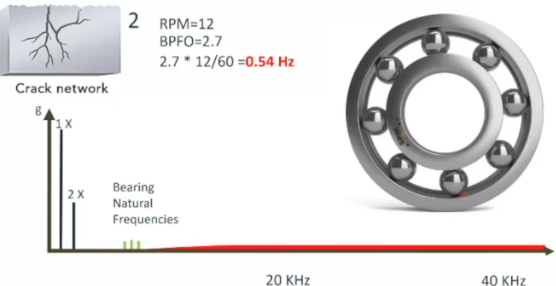
Figure 1: A bearing with a crack network
Every time the rolling element passes the damaged area, a familiar spectrum pattern is seen. This is called modulation. We simply count the number of events per revolution, with the event being the rising of the broadband floor noise.
If you calculate every time one of the rolling elements passes the red damage spot versus the rotation of the shaft, it will be 2.7 times per revolution. This way, we know the damage is in the outer race.
I have seen some vibration techniques recommending high-sensitivity, low-frequency transducers. I do not recommend this. The transducer will not be able to pick up those stress waves because the cut-off is much too low in frequency.

